Carleton University — Research Assistant

Skills
Summary
Simulated the cold and hot flow of the JetCat P500 to establish a baseline burner efficiency and validate whether targeted design improvements increase it.
Section 1
Cold and Hot Flow Simulation
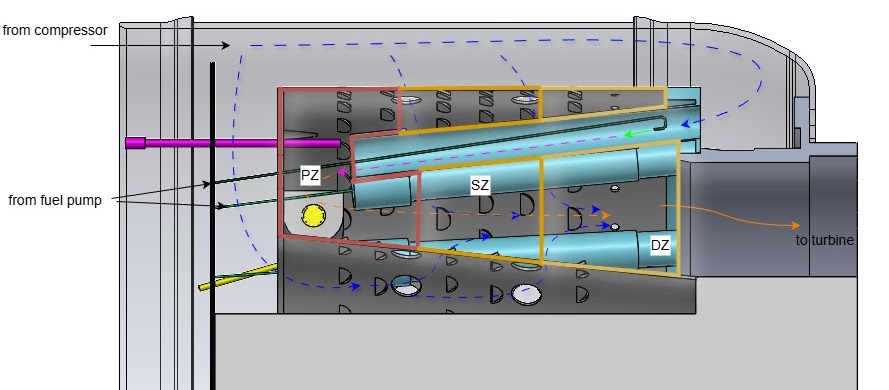
Using reverse-engineered properties and geometry from the JetCat P500, a cold flow simulation of the gas turbine was performed.
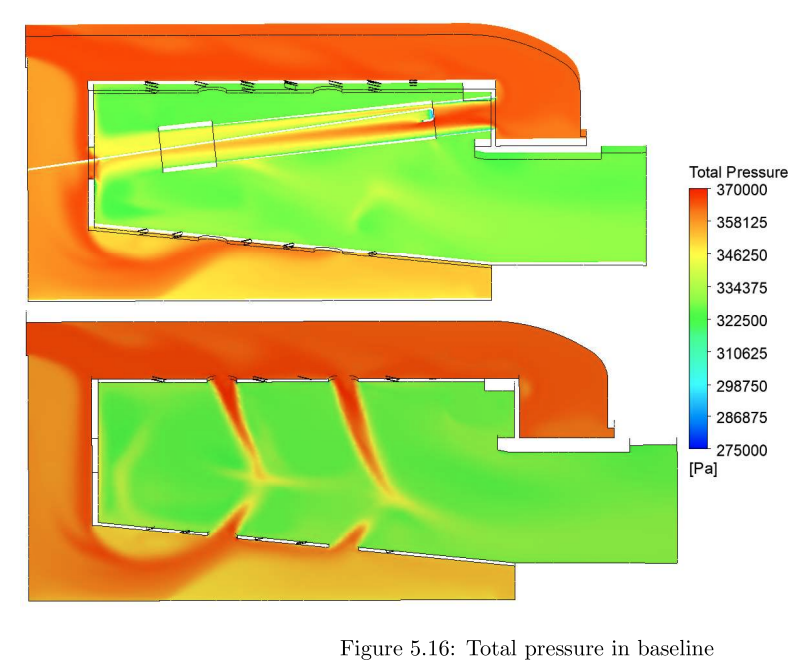
After inputting the boundary conditions into Ansys Fluent, the cold flow simulation was run to convergence.
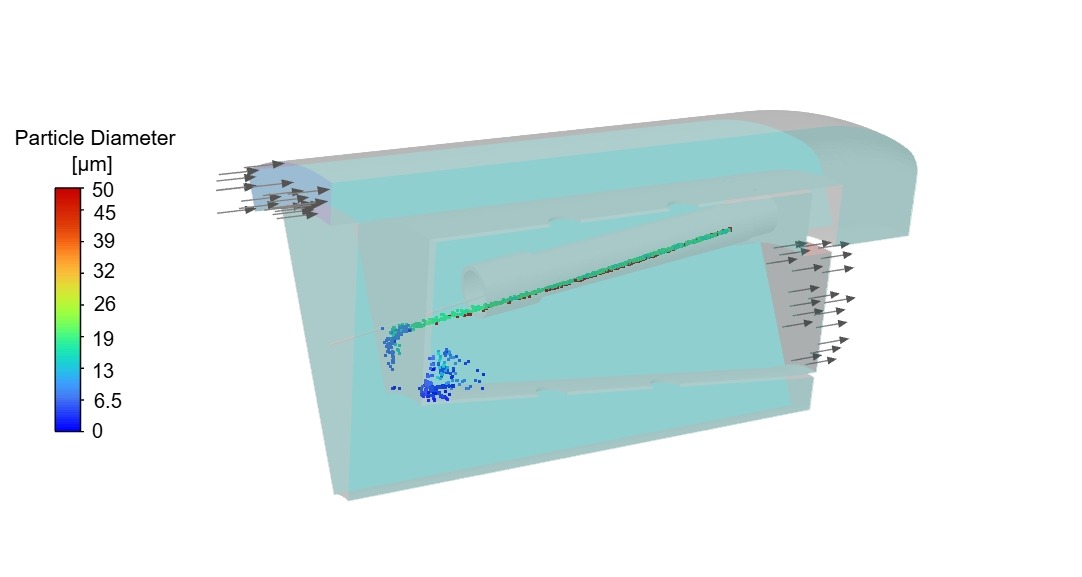
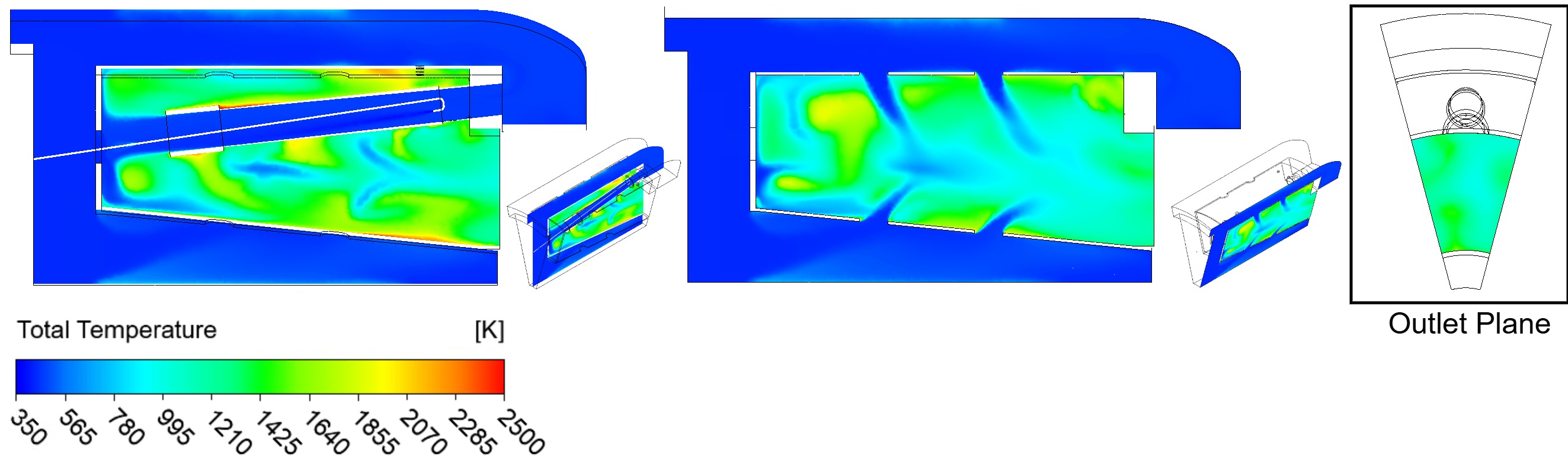
Using the converged results, a discrete phase was used to simulate fuel injection. Species transport paired with a custom Chemkin mechanism was used to simulate combustion.
Section 2
Fuel Injector Study
Developed an empirical relationship to determine at what size an engine should employ fuel injection instead of vaporization. Key findings:
- For engine mass <= 17.6 kg, vaporization is preferred.
- For engine mass >= 46 kg, atomization is preferred.
- More data is needed for engines between 17.6 kg and 46 kg.
- Vaporization is preferred for engine volumes <= 0.037 m^3, while atomization is common above 0.053 m^3.
- In line with the observed trends, most of the unknown engines can be assumed to use pressure atomizers.
Reference
Full details are available in the corresponding section of the accompanying paper:Injector-Study.pdf